

Hey there! As a supplier for chemical plants, I've got a lot to share about the chemical reaction processes that go down in these places. It's like a big, complex dance of molecules, and I'm here to break it down for you.
Let's start with the basics. Chemical reactions in a plant can be divided into a few main types: synthesis, decomposition, single - displacement, double - displacement, and combustion. Each type plays a crucial role in creating the various chemical products we use every day.
Synthesis reactions are all about building things up. In a chemical plant, this might mean combining two or more simple substances to form a more complex one. For example, when hydrogen and oxygen react, they form water. In a plant setting, this could be part of a process to produce high - purity water for other chemical reactions or for use in cleaning and cooling systems.
Decomposition reactions are the opposite. They take a complex compound and break it down into simpler substances. Take hydrogen peroxide, for instance. It can decompose into water and oxygen. In a chemical plant, decomposition reactions can be used to extract valuable components from a larger compound or to get rid of unwanted by - products.
Single - displacement reactions occur when one element replaces another in a compound. A classic example is when zinc reacts with hydrochloric acid. The zinc displaces the hydrogen in the acid, forming zinc chloride and releasing hydrogen gas. These types of reactions are often used in metal extraction processes in chemical plants.
Double - displacement reactions involve the exchange of ions between two compounds. For example, when sodium chloride reacts with silver nitrate, sodium nitrate and silver chloride are formed. This type of reaction is commonly used in the production of salts and in water treatment processes to remove certain ions.
Combustion reactions are all about burning. When a fuel reacts with oxygen, it releases energy in the form of heat and light. In a chemical plant, combustion can be used to generate power for the plant's operations or to drive other chemical reactions. For example, natural gas combustion can provide the heat needed to initiate other endothermic reactions.
Now, let's talk about some specific chemical plants and the reactions that happen in them. One of the plants I supply to is a White Carbon Black Plant. White carbon black is a fine powder that's used in a variety of industries, including rubber, plastics, and coatings.
In a white carbon black plant, the main reaction usually involves the hydrolysis of silicon tetrachloride or the reaction of sodium silicate with an acid. When silicon tetrachloride reacts with water, it forms silica gel and hydrochloric acid. The silica gel is then processed further to make white carbon black. This reaction is carefully controlled to ensure the right particle size and purity of the final product.
Another interesting plant is the Sodium Silicate Plant From Rice Husk Ash. Rice husk ash is a by - product of the rice milling industry, and it contains a significant amount of silica. In this plant, the rice husk ash is reacted with sodium carbonate or sodium hydroxide at high temperatures. This reaction forms sodium silicate, which is a versatile chemical used in detergents, adhesives, and as a binder in foundry applications.
The process starts with the preparation of the rice husk ash. It's usually cleaned and ground to a fine powder. Then, it's mixed with the sodium compound and heated in a furnace. The high temperature causes the silica in the rice husk ash to react with the sodium compound, forming sodium silicate. The product is then cooled and purified before it's ready for use.

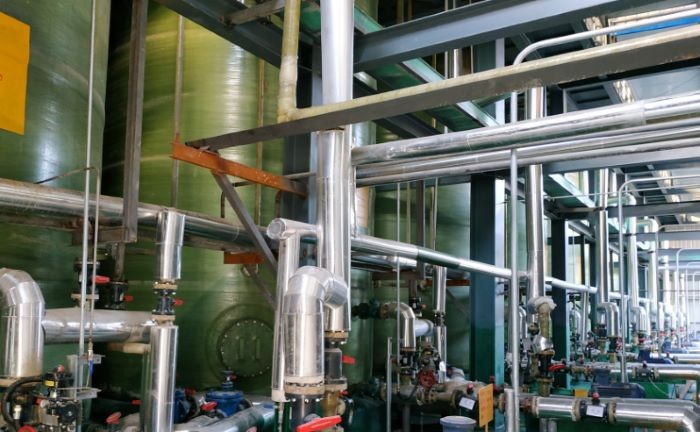
Let's also touch on the role of storage and handling in chemical plants. For example, LPG Bullet Tanks are used to store liquefied petroleum gas (LPG). LPG is a mixture of propane and butane, and it's an important fuel in many chemical processes.
The storage of LPG in bullet tanks is crucial for maintaining a steady supply of fuel to the plant. These tanks are designed to withstand high pressures and are made of materials that are resistant to corrosion. When LPG is needed for a reaction, it's carefully transferred from the tank to the reaction vessel. The transfer process is closely monitored to prevent leaks and ensure safety.
In a chemical plant, safety is always a top priority. Chemical reactions can be dangerous, especially if they're not properly controlled. That's why there are strict safety protocols in place. Workers are trained to handle chemicals safely, and there are emergency response plans in case of accidents.
The reaction vessels in a chemical plant are also designed with safety in mind. They're made of materials that can withstand the high temperatures and pressures of the reactions. They often have sensors and control systems to monitor the reaction conditions and make adjustments as needed.
Another important aspect of chemical plant operations is waste management. Chemical reactions can produce a lot of waste, including by - products and unused reactants. Proper waste management is essential to minimize the environmental impact of the plant.
Some waste can be recycled or reused in other processes. For example, the hydrochloric acid produced in the white carbon black plant can be neutralized and used in other acid - based reactions or in water treatment. Other waste may need to be treated before it can be safely disposed of.
So, there you have it - a glimpse into the chemical reaction processes in a chemical plant. Whether it's building up complex compounds, breaking them down, or storing and handling the chemicals involved, it's a fascinating and complex world.
If you're in the market for chemical plant equipment or supplies, I'd love to have a chat with you. Whether you're looking to set up a new plant or upgrade an existing one, I've got the knowledge and products to help you out. Just reach out, and we can start discussing your needs.
References
- Atkins, P. W., & de Paula, J. (2014). Physical Chemistry for the Life Sciences. Oxford University Press.
- Chang, R. (2010). Chemistry. McGraw - Hill.
- McMurry, J., & Fay, R. C. (2012). Chemistry. Pearson.