

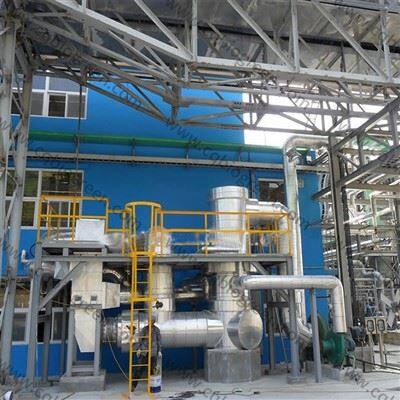
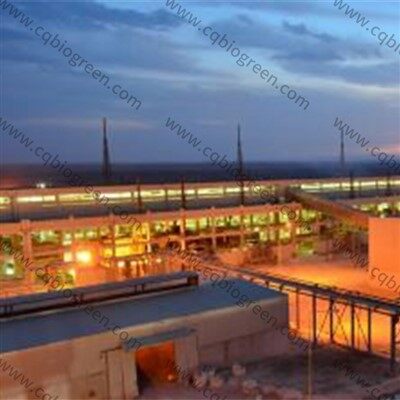
SOP production line
The SOP production line is designed for the production of Potassium Sulfate using Potassium Chloride (KCl) as the raw material and Sulfuric Acid (H2SO4) in the Mannheim Furnace reaction. The primary output is Potassium Sulfate, with Hydrochloric Acid as a by-product. The production capacity ranges from 10,000.00 to 260,000.00 tons per year.
Description
Mannheim process for SOP production line started in China from 1990's. After so many years accumulation experience, the production is quite mature and reliable. Up to now, the total design capacity for SOP production with Mannheim process is over 4 million tons per year in
China. The maximum SOP reactor capacity in China is 10,000 ton. Due to the availability of local skilled Chinese operators and availability of spare parts at low costs, cheap equipment with less reliability are used in many SOP production lines, and also the operation of the plants is almost totally manual.
CBETC has rich experience for SOP production line and operation and concluded that these existed arrangement and practices of SOP production line in China are not very appropriate in other countries considering the local workers' operation skill and local incomplete industry support system as well as the non-availability of spare parts in the local markets. Based on these, we upgraded the plant arrangement including more reliable equipment and material of construction (MOC) selection and automation level.

Process Optimization for SOP System
CBETC is the first one in China to adopt DCS system to monitor and control the main process parameters to increase the system reliability and decrease the intensity of operation work.
CBETC designed the new automatic burning system specially for SOP production line jointly with reputable burner vendors of International famous brand and selected the world-famous control elements.
Optimizing the equipment arrangement to reduce the blockage of material, thus, to keep the higher productivity.
FAQ for SOP production line
Q: Does the KCl, MgCl2, NaCl content of the raw material matter?
Q: Does the anti-caking agent of the raw material matter?
However, the amount of vapor will carry the impurity to the 1st stage of the HCL absorption system.
Q: How to control the temperature of the furnace reactor and conversion rate?
In addition, the operator can use the 'manual' function to set the required values directly (it's not recommended when the system is stable).
Q: What is the HCl by-product from the SOP plant often used for?


